Part of the 90 Leads resource library. This article reflects guidance as of October 2026.
Most roofing owners who try Google Ads ask the same two questions within the first month: “How much should I be spending?” and “Why are my leads so expensive?” The honest answer is that the budget matters less than what you are paying for. A roofer can spend a lot on clicks from people who want a $200 patch, a gutter cleaning or a job in a town you do not serve, and very little on homeowners who need a full replacement.
This guide covers how Google Ads for roofers works, what each ad type charges you for, how to set a budget you can defend and what to check weekly so spend turns into booked inspections.
The two ways roofers show up in Google’s paid results
When a homeowner searches “roof repair near me” or “roofer in [your city],” there are usually two kinds of paid listings above the regular results. They work differently and you should judge them differently.
Local Services Ads (the “Google Guaranteed” listings)
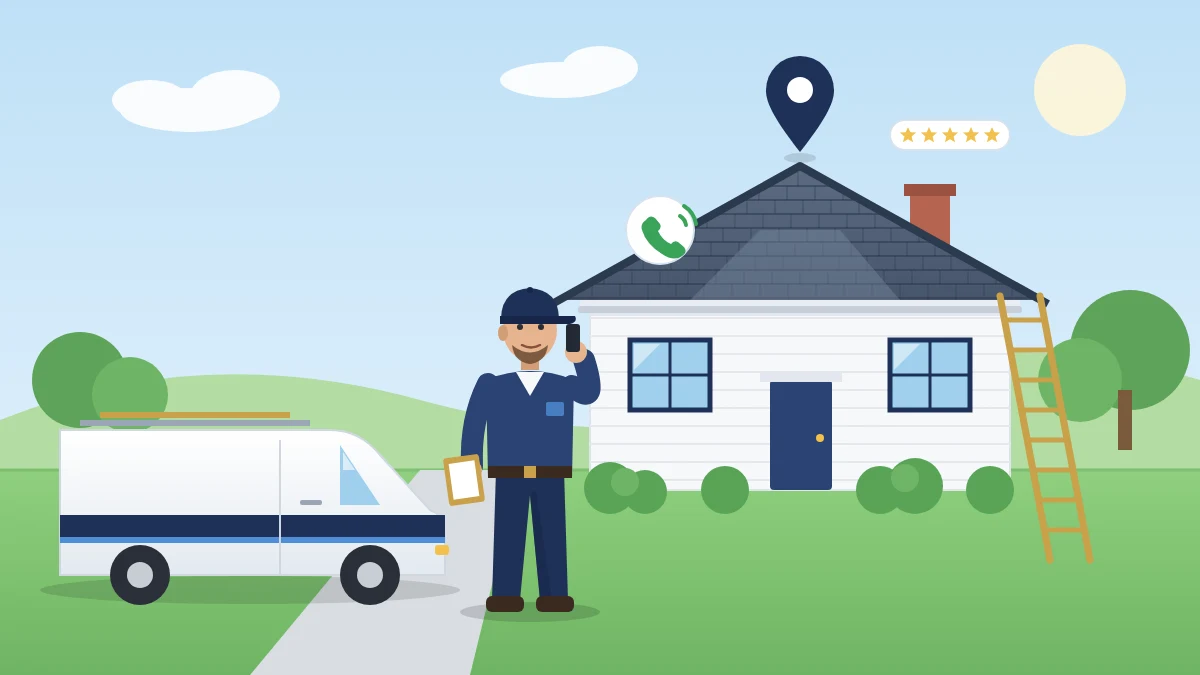
Local Services Ads, often called LSA, are the boxes at the very top with your business name, star rating and a badge. You do not write ad copy and you do not pick keywords. Google matches you to searches based on the job types and service area you select in your profile, and homeowners call or message you directly from the listing.
The big difference is how you pay. According to Google’s own Local Services Ads help page, you pay per valid lead, not per click. A lead counts when you answer a call, return a call and talk to the customer, get a text, email, voicemail or booking request, or miss a call during business hours where the caller stayed on the line more than 20 seconds. So if nobody picks up while your crew is on a roof, you can still pay for that call.
Google Search Ads (pay per click)
Search Ads are the text ads with “Sponsored” next to them. Here you choose the keywords, write the ads, pick the landing page and pay each time someone clicks. You can target “roof replacement” and “storm damage roof inspection” while excluding “roof repair DIY,” “roofing jobs” or “metal roof prices.”
What should a roofing lead cost?
There is no single right number for every market, but the broader benchmarks give you a starting point.
- WordStream by LocaliQ’s 2025 benchmark report, summarized by Search Engine Land, put the average Google Ads cost per lead across all industries at $70.11, up from $66.69 the year before.
- The same report lists home improvement among the categories with consistently high costs per click, in the $7+ range.
Because roofing jobs are large and competition is heavy, do not be surprised if your costs run higher than those averages. That is fine, as long as you measure the right thing. A roofing lead is not one number. A storm-damage inspection in your core zip codes is worth far more than a small repair call 40 miles out. The better question is: what does it cost you to book an inspection that turns into a signed job?
To answer that, you need three numbers from your own business:
- Your average gross profit on a replacement job.
- How many inspections it takes, on average, to sign one replacement.
- How many paid leads it takes to book one inspection.
With those, you can work backward to what you can afford to pay per lead and still make money. Most roofers only track the first, and that is where ad budgets get wasted.
How to set a starting budget you can defend
Start with how many signed jobs you want from Google each month and how much crew capacity you have to deliver them.
- Start with capacity. If your crews can take on four more replacements a month, do not buy leads for ten.
- Work backward from your close rate. If you sign one in four inspections, four more jobs means about sixteen inspections.
- Use your own lead-to-inspection rate. If half of your paid leads book an inspection, you need about thirty-two leads.
- Multiply by a realistic cost per lead for your market. That gives you a starting monthly budget, which you then adjust once you have real data.
For more on fitting ads into an overall plan, our guide to a practical marketing budget for home-service businesses covers how to split spend across channels without starving the work that keeps paying off.
Why roofing leads get expensive (and how to fix it)
The wrong job types are turned on
In LSA, every job type you select is a door for leads. If you only want replacements and insurance work, but repair, gutter and maintenance categories are switched on, you will pay for those calls too. Review your job types and service area at least once a season.
Keywords are too broad
In Search campaigns, broad match keywords let Google decide what counts as “related.” Check your search terms report weekly and add negative keywords for anything that is not a paying job for you: “jobs,” “salary,” “DIY,” “shingles for sale,” “cheap,” competitor names you do not want to bid on, and towns you do not serve.
Calls are going to voicemail
With LSA, a missed call during business hours can still count as a charged lead. With Search Ads, an unanswered call is a click you paid for and a homeowner who just dialed the next roofer. If the office cannot answer while the crew is on a roof, fix that before you raise the budget.
The landing page does not match the search
Send ad traffic to a page that matches the job, shows your service area, has real photos of your work and puts the phone number where a thumb can reach it. Our article on helping homeowners compare roofing estimates covers what that page should explain.
Reviews are thin or stale
LSA listings show your rating and review count next to competitors. Asking every satisfied customer for a review is one of the cheapest ways to lower your cost per booked job.
LSA or Search Ads: which should a roofer use?
For most local roofing companies, the practical answer is both, in this order:
- Get LSA set up and running cleanly first. It sits at the top, it charges per lead rather than per click, and it is simpler to manage once your job types, hours and service area are right.
- Add Search Ads for the jobs you most want. Use them for high-value searches like roof replacement, storm damage and specific materials you install, with tight keywords and a matching landing page.
- Keep your Google Business Profile strong. Reviews and photos on your profile help both your paid and free Map Pack visibility. Our SEO and Maps work is built around that.
What to do this week
- Open your LSA dashboard and confirm only the job types you want are turned on.
- Check your business hours in LSA match when someone actually answers the phone.
- Pull last month’s leads and mark each one: booked inspection, not a fit, or never reached.
- In Search Ads, open the search terms report and add at least ten negative keywords.
- Make sure every ad sends people to a page about that specific job, not your home page.
- Ask your last five happy customers for a Google review.
Frequently asked questions
How much should a roofer spend on Google Ads per month?
Start from the number of jobs you want and can handle, then work backward using your close rate, your lead-to-inspection rate and the cost per lead in your area. A small, well-targeted budget that books inspections beats a large one spread across every roofing search.
Are Local Services Ads worth it for roofers?
For many roofers, yes, because you pay per lead instead of per click and you appear at the top of results. They work best when you answer calls quickly, keep job types limited to the work you want and build up recent reviews. Google can credit some leads it judges invalid or low quality, so check your lead list regularly.
Why am I getting so many repair calls when I want replacements?
Usually because repair job types are turned on in LSA, or your Search keywords include broad terms like “roof repair.” Narrow your job types, add negative keywords and send ads to a replacement-focused page.
Want a second set of eyes on your roofing ads?
If you are spending on Google and are not sure which leads are turning into signed jobs, we can help you sort it out. Our Google and Meta ads team works with home service companies to tighten targeting, fix lead tracking and put budget behind the jobs you actually want. See how we approach roofing marketing, or get a free growth assessment and we will show you where your leads are coming from and where the money is leaking.