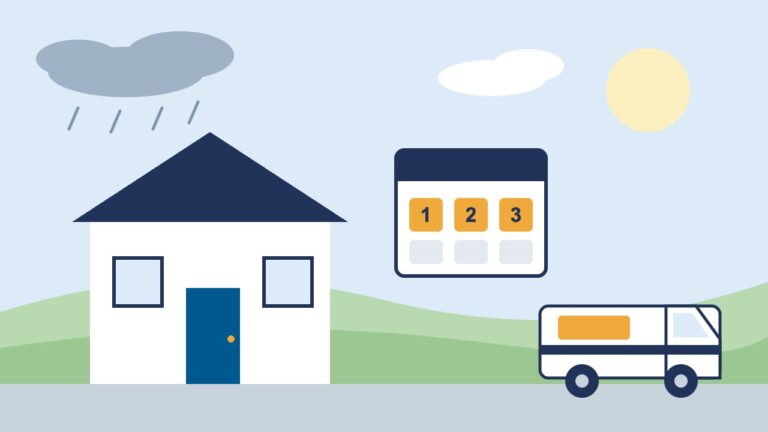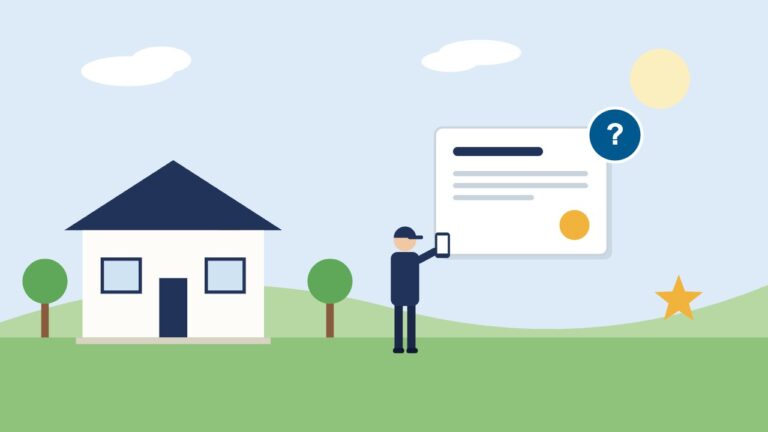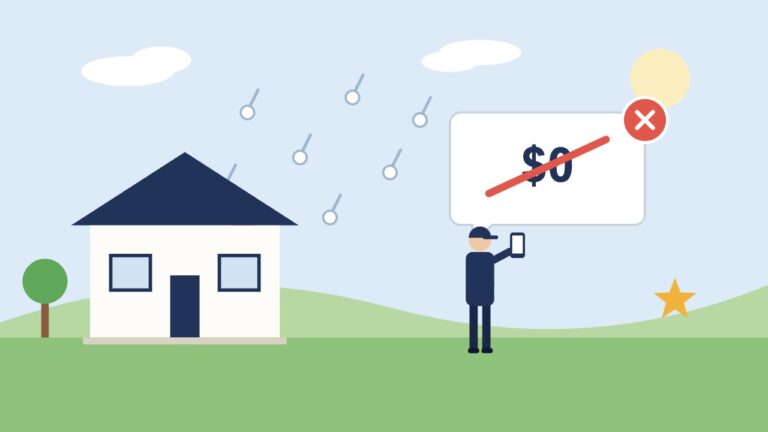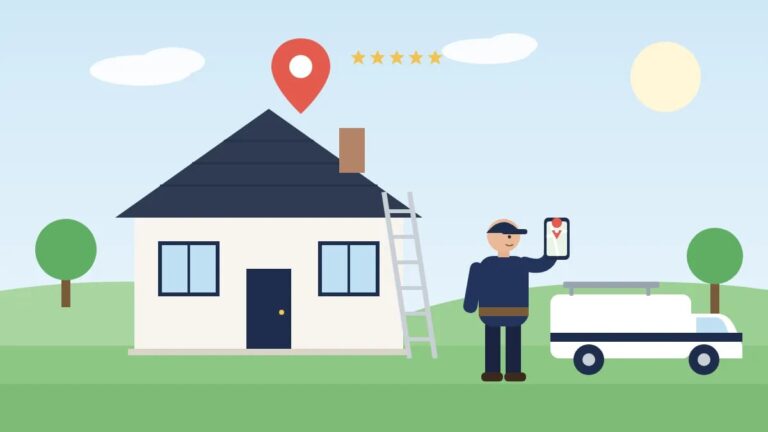
Florida has one of the most specific laws in the country on how roofers can market around insurance claims. It covers door hangers, emails and flyers, it bans the free gift card for an inspection, and it puts required wording into your contracts. A violation can cost up to $10,000 each.
Sources: Florida Statutes sections 489.147 and 489.119(5), checked November 20, 2026. This is a summary, not legal advice. Talk to a Florida construction attorney before you change your contracts.
The short version
- Any written or electronic piece that encourages a homeowner to contact you or a public adjuster about a roof-damage insurance claim must carry three disclosures in a set type size.
- No gifts, gift cards, cash, coupons or deductible waivers in exchange for a roof inspection or for filing a claim.
- No paying or accepting referral fees for work an insurance policy will pay for.
- No interpreting the policy or adjusting the claim unless you’re a licensed public adjuster.
- Your license number still goes on every ad, bid and contract.
What counts as a “prohibited advertisement”
The law defines it as a written or electronic communication from a contractor that encourages a consumer to contact a contractor or public adjuster to make an insurance claim for roof damage, unless it includes three statements:
- The consumer is responsible for paying any insurance deductible.
- It is a third-degree felony for a contractor to knowingly and intentionally waive or rebate a deductible with intent to defraud.
- It is a third-degree felony to intentionally file an insurance claim with false, incomplete or misleading information.
That is the substance of the three statements, not their exact wording. Take the wording from the statute. The statements have to be in at least 12-point type, and at least half as large as the largest type in the piece. The law names door hangers, business cards, magnets, flyers, pamphlets and emails as examples.
The practical reading: an ad about your roofing work doesn’t trigger this. An ad that says “storm damage? your insurance may pay for a new roof, call us” does. If the piece points people toward a claim, either add the three statements at the right size or rewrite it.
What you can’t do
| Prohibited | Notes |
|---|---|
| Soliciting a homeowner with a prohibited advertisement | Soliciting means contacting a specific person in person, by email, phone or other real-time means, or by delivery to them |
| Offering a rebate, gift, gift card, cash, coupon, deductible waiver or anything of value | In exchange for allowing a roof inspection or making a claim for roof damage |
| Offering, paying or accepting compensation for referrals | For services payable from property insurance. Being paid for roofing work you performed isn’t a referral fee |
| Interpreting policy provisions, advising on coverage or adjusting the claim | Unless you hold a public adjuster license |
| Giving an insured an agreement authorizing repairs without an estimate | It must come with a good faith, itemized, detailed estimate of the cost |
The law treats what your canvassers and paid lead sources do as your own acts. That includes people who aren’t employees but are paid to solicit for you.
What goes in your contracts
- Every roof repair or replacement contract needs a notice that the contractor may not offer gifts, rebates or deductible waivers for an inspection or a claim. If the notice is missing, the owner can void the contract within 10 days of signing.
- Every roof repair or replacement contract also needs set language on the signature page, in bold type of at least 14 points, telling the owner to contact their insurance company to verify coverage if the work relates to a claim.
- After a declared state of emergency, for property in the covered area and contracts signed within 180 days of the event, the owner can cancel without penalty within 10 days of signing or the official start date, whichever comes first. The cancellation wording has to appear in bold, at least 14-point type, immediately before the owner’s signature.
The statute gives the exact wording for the last two. Copy it from the statute, not from this article.
Penalties
- A licensed contractor who violates the section faces license discipline and a fine of up to $10,000 per violation.
- An unlicensed person who does any of it is treated as contracting without a license and can also be fined up to $10,000 per violation.
Your license number still applies
Separately, Florida requires your registration or certification number in every offer, bid, contract and advertisement, in any medium, and next to your name on a marked vehicle. The licensing board’s rule counts websites, flyers, coupons, billboards and vehicle signs as advertising. Shirts, hats and other novelties are exempt.
A checklist for your marketing
- Pull every door hanger, mailer, magnet and email that mentions insurance or claims. Add the three statements at the required size, or remove the claim language.
- Drop “free gift card with your inspection” and anything like it.
- Take “we’ll cover your deductible” out of every ad, script and canvasser pitch.
- Check your lead sources. If you pay someone per referral for insurance jobs, ask your attorney about it now.
- Train sales staff not to explain what the policy covers. Their job is the roof.
- Have your attorney confirm the notice and signature-page wording in your contract template.
- License number on the website footer, landing pages, social profiles, printed pieces and trucks.
Texas has its own version of the deductible rule; see Texas roofing ads, deductibles and insurance claims. Selling at the door after a storm? Read the three-day cancellation rule for roofers. If you’d like a second set of eyes on your roofing ads, build a growth plan with us.