If your crew knocks on doors after a hailstorm and signs a homeowner at the kitchen table, a federal rule decides what has to be in that contract and how long the homeowner has to back out. Most roofers know “three days.” Fewer know about the second form, the type size, or the deadline that applies to them once a customer cancels.
Source: the Federal Trade Commission’s Cooling-Off Rule, 16 CFR Part 429, sections 429.0 and 429.1, checked November 20, 2026. This is a summary, not legal advice. Your state and city may add rules of their own.
The short version
- The rule covers sales of $25 or more made at the buyer’s home, when you or your rep solicit the sale in person. It applies even if the homeowner invited you.
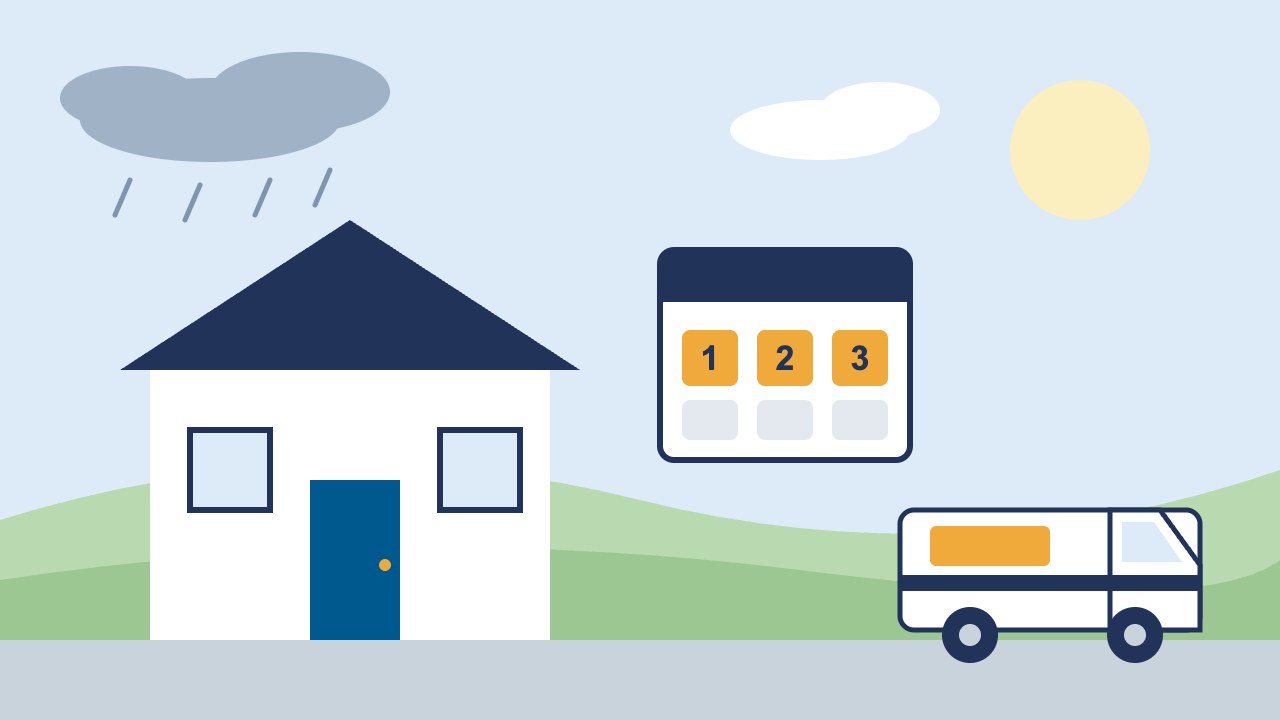
- The buyer can cancel until midnight of the third business day after the sale.
- You owe them a completed contract or receipt with a cancellation statement, two copies of a cancellation form, and a spoken explanation of the right to cancel.
- If they cancel, you have 10 business days to refund everything.
- Saturday counts as a business day. Sunday and federal holidays don’t.
When the rule applies
The rule defines a door-to-door sale as a sale of consumer goods or services where the seller personally solicits the sale and the buyer agrees somewhere other than the seller’s place of business. For a sale at the buyer’s residence the threshold is a purchase price of $25 or more. For a sale at another location, such as a hotel room, fairground or the buyer’s workplace, it is $130 or more.
Two points catch roofers out:
- An invitation doesn’t take you out of the rule. A sale that follows the buyer’s invitation is still covered.
- The repair exception is narrow. There is an exclusion when the buyer contacts you and specifically asks you to come to the home to repair or maintain their personal property. It doesn’t cover extra goods or services sold during that visit beyond the replacement parts the repair needs. Don’t assume it covers a full roof sold on an inspection visit; ask your attorney.
What isn’t covered
| Exclusion | What it takes |
|---|---|
| Negotiated at your store first | The sale follows prior negotiations during the buyer’s visit to your fixed, permanent retail location |
| Immediate personal emergency | The buyer contacted you, needs the work for a real emergency, and gives you a separate, dated, signed statement in their own handwriting describing the emergency and waiving the three-day right |
| Mail or phone only | The whole sale is made by mail or phone with no other contact before the work |
| Buyer-requested repair or maintenance | See the note above |
| Other federal rescission rights | Deals where federal credit law already gives the consumer a right to rescind |
The emergency waiver has to be the buyer’s own handwritten statement. A pre-printed waiver in your paperwork doesn’t do it, and the rule separately bars putting any waiver of these rights in the contract.
What you have to give the homeowner
- A completed receipt or copy of the contract at signing, in the same language you used in the sales presentation. It shows the date and your name and address.
- A cancellation statement near the buyer’s signature, in bold type of at least 10 points, saying they may cancel any time before midnight of the third business day after the transaction.
- Two copies of a cancellation form, titled “Notice of Right to Cancel” or “Notice of Cancellation”, in 10-point bold type and in the same language as the contract. You fill in your name, your business address, the date and the cancellation deadline before you hand them over.
- A spoken notice. You have to tell each buyer about the right to cancel when they sign.
The rule sets out the wording for the statement and the form. Copy it from the rule itself.
What you can’t do
- Put a waiver of the buyer’s cancellation rights, or a confession of judgment, in the contract or receipt.
- Misrepresent the right to cancel in any way.
- Sell or assign the buyer’s note to a finance company before midnight of the fifth business day after signing.
If the homeowner cancels
Within 10 business days of receiving the cancellation notice, you have to:
- Refund every payment made
- Return any trade-in in substantially the same condition
- Cancel and return any note the buyer signed, and end any security interest that came with it
- Tell the buyer whether you’ll pick up or abandon anything already delivered
That is why many roofers don’t order materials or schedule a tear-off until the three days are up.
Counting the three days
A business day is any calendar day except Sunday or a federal holiday. So a contract signed on Thursday can be cancelled through midnight Monday: Friday, Saturday and Monday are the three business days.
State and city rules come on top
The federal rule is the floor. Many cities require a solicitor’s permit before anyone knocks, and some states add longer cancellation periods for roofing work tied to storms or insurance claims. Florida, for example, gives homeowners 10 days in some cases; see Florida roofing ads and insurance claims. For Texas, see Texas roofing ads, deductibles and insurance claims. Check the city’s rules before your canvassers go out.
A checklist before the next storm
- Contract template: cancellation statement next to the signature line, bold, 10 points or larger
- Cancellation form: two copies in every sales packet, with your name and address pre-filled
- Canvasser script: one line that tells the homeowner about the three-day right
- Spanish-language packets if your reps sell in Spanish
- No materials ordered and no finance paperwork assigned until the waiting period has passed
- A named person in the office who handles cancellations and gets refunds out inside 10 business days
- Solicitor permits checked for each city you work
Door knocking works best when homeowners can also find you online that same evening. If you’d like help with that part, build a growth plan with us.